Prayer
So we hail our God, Eternal God, Ras Tafari, hear us and help us and cause Thy face to shine upon us, Thy children.
Kebra Negast
9. CONCERNING THE COVENANT OF NOAH
And then Noah the righteous man died, and Shem reigned in wisdom and righteousness, for he was blessed by Noah, saying, “Be God to thy brother.” And to Ham he said, “Be servant to thy brother.” And he said unto Japhet, “Be thou servant to Shem my heir, and be thou subject unto him.” 2 And again, after the Flood, the Devil, our Enemy, did not cease from his hostility against the children of Noah, but stirred up Canaan, the son of Ham, and he became the violent tyrant (or usurper) who rent the kingdom from the children of Shem. Now they had divided the earth among them, and Noah had made them swear by the Name of his God that they would not encroach on each other’s boundaries, and would not eat the beast that had died of itself or had been rent [by wild animals], and that they would not cultivate harlotry against the law, lest God should again become angry with them and punish them with a Flood. And as for Noah, he humbled himself, and offered up sacrifice, and he cried out, and groaned, and wept. And God held converse with Noah, who said [unto Him], “If Thou wilt destroy the earth a second time with a Flood, blot Thou me out with those who are to perish.” And God said unto him, “I will make a covenant with thee that thou shalt tell thy children they shall not eat the beast that hath died of itself or that hath been torn by wild beasts, and they shall not cultivate harlotry against the law; and I, on My part, [covenant] that I will not destroy the earth a second time with a Flood, and that I will give unto thy children Winter and Summer, Seedtime and Harvest, Autumn and Spring.
Isaiah 40
1 Comfort ye, comfort ye my people, saith your God.
2 Speak ye comfortably to Jerusalem, and cry unto her, that her warfare is accomplished, that her iniquity is pardoned: for she hath received of the LORD’S hand double for all her sins.
3 The voice of him that crieth in the wilderness, Prepare ye the way of the LORD, make straight in the desert a highway for our God.
4 Every valley shall be exalted, and every mountain and hill shall be made low: and the crooked shall be made straight, and the rough places plain:
5 And the glory of the LORD shall be revealed, and all flesh shall see it together: for the mouth of the LORD hath spoken it.
6 The voice said, Cry. And he said, What shall I cry? All flesh is grass, and all the goodliness thereof is as the flower of the field:
7 The grass withereth, the flower fadeth: because the spirit of the LORD bloweth upon it: surely the people is grass.
8 The grass withereth, the flower fadeth: but the word of our God shall stand for ever.
9 O Zion, that bringest good tidings, get thee up into the high mountain; O Jerusalem, that bringest good tidings, lift up thy voice with strength; lift it up, be not afraid; say unto the cities of Judah, Behold your God!
This is the first part of psalm 40 that I’m going to give you to study. This portion of the psalm talks joyously of the Word of the Lord being established and the prophesies that had been made about the protection and care of God’s people. Their striving and struggle will come to an end at JAH’s will, and JAH’s presence will be felt. It is a similar to the ideas in the chapter of the Kebra Negast, the people have cried out from the punishment from JAH and He has forgiven and comforted them. Their boundaries and land have been re-established in JAH’s care of them.
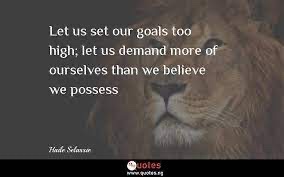
Looking at the quote by H.I.M. Haile Selassie I at the top of the page, this is the ideal by which His Imperial Majesty lived. He gave the best and the most of himself and encouraged the same from his people. It was with this striving that he established in 1963, the Organisation for African Unity and became its first president. Here is a part of his acceptance speech…
The Wise Words Of His Imperial Majesty
This is indeed a momentous and historic day for Africa and for all Africans. We stand today on the stage of world affairs before the audience of world opinion. We have come together to assert our role in the direction of world affairs and to discharge our duty to the great continent whose 250 million people we lead. Africa is today at midcourse, in transition from the Africa of Yesterday to the Africa of Tomorrow. Even as we stand here, we move from the past into the future. The task on which we have embarked, the making of Africa, will not wait. We must act, to shape and mould the future and leave our imprint on events as they slip past into history.
We seek, at this meeting, to determine whither we are go and to chart the course of our destiny. It is no less important that we know whence we came. An awareness of our past is essential to the establishment of our personality and our identity as Africans.
This world was not created piecemeal. Africa was born no later and no earlier than any other geographical area on this globe. Africans, no more and no less than other men, possess all human attributes, talents and deficiencies, virtues and faults. Thousands of years ago, civilisations flourished in Africa which suffer not at all by comparison with those of other continents. In those centuries, Africans were politically free and economically independent. Their social patterns were their own and their cultures truly indigenous.
The obscurity which enshrouds the centuries which elapsed between those earliest days and the rediscovery of Africa is being gradually dispersed. What is certain is that during those long years Africans were born, lived, and died. Men on other parts of this earth occupied themselves with their own concerns and, in their conceit, proclaimed that the world began and ended at their horizons. All unknown to them, Africa developed in its own pattern, growing in its own life and, in the nineteenth century, finally re-emerged into the world’s consciousness.
The events of the past 150 years require no extended recitation from us. The period of colonialism into which we were plunged culminated with our continent fettered and bound; with our once proud and free peoples reduced to humiliation and slavery; with Africa’s terrain cross-hatched and chequer-boarded by artificial and arbitrary boundaries. Many of us, during those bitter years, were overwhelmed in battle, and those who escaped conquest did so at the cost of desperate resistance and bloodshed. Others were sold into bondage as the price extracted by the colonialists for the ‘protection’ which they extended and the possessions of which they disposed. Africa was a physical resource to be exploited and Africans were chattels to be purchased bodily or, at best, peoples to be reduced to vassalage and lackeyhood. Africa was the market for the produce of other nations and the source of the raw materials with which their factories were fed.
Today, Africa has emerged from this dark passage. Our Armageddon is past. Africa has been reborn as a free continent and Africans have been reborn as free men. The blood that was shed and the sufferings that were endured are today Africa’s advocates for freedom and unity. Those men who refused to accept the judgment passed upon them by the colonisers, who held unswervingly through the darkest hours to a vision of an Africa emancipated from political, economic, and spiritual domination, will be remembered and revered wherever Africans meet. Many of them never set foot on this continent. Others were born and died here. What we may utter today can add little to the heroic struggle of those who, by their example, have shown us how precious are freedom and human dignity and of how little value is life without them. Their deeds are written in history.
Africa’s victory, although proclaimed, is not yet total, and areas of resistance still remain. Today, We name as our first great task the final liberating of those Africans still dominated by foreign exploitation and control. With the goal in sight, and unqualified triumph within our grasp, let us not now falter or lag or relax. We must make one final supreme effort; now, when the struggle grows weary, when so much has been won that the thrilling sense of achievement has brought us near satiation. Our liberty is meaningless unless all Africans are free. Our brothers in the Rhodesias, in Mozambique, in Angola, in South Africa, cry out in anguish for our support and assistance. We must urge on their behalf their peaceful accession to independence. We must align and identify ourselves with all aspects of their struggle. It would be betrayal were we to pay only lip service to the cause of their liberation and fail to back our words with action.
To them we say, your pleas shall not go unheeded. The resources of Africa and of all freedom-loving nations are marshalled in your service. Be of good heart, for your deliverance is at hand.
As we renew our vow that all of Africa shall be free, let us also resolve that old wounds shall be healed and past scars forgotten. It was thus that Ethiopia treated the invader nearly 25 years ago, and Ethiopians found peace with honour in this course. Memories of past injustice should not divert us from the more pressing business at hand. We must live in peace with our former colonisers, shunning recrimination and bitterness and forswearing the luxury of vengeance and retaliation, lest the acid of hatred erode our souls and poison our hearts. Let us act as befits the dignity which we claim for ourselves as Africans, proud of our own special qualities, distinctions, and abilities. Our efforts as free men must be to establish new relationships, devoid of any resentment and hostility, restored to our belief and faith in ourselves as individuals, dealing on a basis of equality with other equally free peoples.
Today, we look to the future calmly, confidently, and courageously. We look to the vision of an Africa not merely free but united. In facing this new challenge, we can take comfort and encouragement from the lessons of the past. We know that there are differences among us. Africans enjoy different cultures, distinctive values, special attributes. But we also know that unity can be and has been attained among men of the most disparate origins, that differences of race, of religion, of culture, of tradition, are no insuperable obstacle to the coming together of peoples. History teaches us that unity is strength, and cautions us to submerge and overcome our differences in the quest for common goals, to strive, with all our combined strength, for the path to true African brotherhood and unity.
There are those who claim that African unity is impossible, that the forces that pull us, some in this direction, others in that, are too strong to be overcome. Around us there is no lack of doubt and pessimism, no absence of critics and criticism. These speak of Africa, of Africa’s future and of her position in the twentieth century in sepulchral tones. They predict dissension and disintegration among Africans and internecine strife and chaos on our continent. Let us confound these and, by our deeds, disperse them in confusion. There are others whose hopes for Africa are bright, who stand with faces upturned in wonder and awe at the creation of a new and happier life, who have dedicated themselves to its realisation and are spurred on by the example of their brothers to whom they owe the achievements of Africa’s past. Let us reward their trust and merit their approval.
Prayer
Princes shall come out of Egypt,
Ethiopia shall stretch forth her hand unto God.
Oh thou God of Ethiopia, thou God of divine majesty,
thy spirit come within our hearts to dwell in the path of righteousness.
That the hungry be fed, the sick nourished, the aged protected, and the infant cared for.
Teach us love and loyalty as it is in Zion.
Selah.

 Lockdown Letters