He shall receive the blessing from the LORD, and righteousness from
the God of his salvation. (Ps 24:5)
We start with a traditional Rastafari prayer:
So we hail our God, Eternal God, Ras Tafari, hear us and help us and cause Thy face to shine upon us, Thy children.
Now it is the next chapter of the Kebra Negast:

7. CONCERNING NOAH
Now Noah was a righteous man. He feared God, and kept the righteousness and the Law which his fathers had declared unto him—now Noah was the tenth generation from Adam—and he kept in remembrance and did what was good, and he preserved his body from fornication, and he admonished his children, bidding them not to mingle with the children of Cain, the arrogant tyrant, the divider of the kingdom, [who] walked in the counsel of the Devil, who maketh evil to flourish. And he taught them everything that God hated—pride, boastfulness of speech, self-adulation, calumniation, false accusation, and the swearing of false oaths. And besides these things, in the wickedness of their uncleanness, which was unlawful and against rule, man wrought pollution with man, and woman worked with woman the abominable thing.
Today’s reading is Psalm 24. It is a psalm of David, praising God for his help in battle and thinking about Heaven. ‘The hill of the Lord’ and ‘his holy place’ are ways of describing heaven and the psalm. In this psalm ‘clean hands and a pure heart’ means that God’s people should do good things as well as avoiding doing evil things.
Psalm 24
1 The earth is the LORD’S, and the fulness thereof; the world, and they that dwell therein.
2 For he hath founded it upon the seas, and established it upon the floods.
3 Who shall ascend into the hill of the LORD? or who shall stand in his holy place?
4 He that hath clean hands, and a pure heart; who hath not lifted up his soul unto vanity, nor sworn deceitfully.
5 He shall receive the blessing from the LORD, and righteousness from the God of his salvation.
6 This is the generation of them that seek him, that seek thy face, O Jacob. Selah.
7 Lift up your heads, O ye gates; and be ye lift up, ye everlasting doors; and the King of glory shall come in.
8 Who is this King of glory? The LORD strong and mighty, the LORD mighty in battle.
9 Lift up your heads, O ye gates; even lift them up, ye everlasting doors; and the King of glory shall come in.
10 Who is this King of glory? The LORD of hosts, he is the King of glory. Selah.
I found a prayer to go along with this psalm…
JAH, you are the King of Glory, and everything ultimately belongs to you. Give me clean hands and a pure heart, as I seek to be part of this generation that seeks your face, who will dwell with you. AMEN
This piece is from the Lion of Judah Society website:
So Abram said to Lot, “Please let there be no strife between you and me, nor between my herdsmen and your herdsmen, for we are brothers. (Genesis 13:8)
Abraham and his nephew Lot both had herds and flocks. In the land of Canaan, water was limited, and the two kinsmen found it impossible to stay together. Their herdsmen quarreled over grazing territory and water rights.
In this relationship, Abraham was Lot’s senior. He was clearly in a position of authority over Lot. He could have sent Lot away, sent him back to Haran, or assigned him to any scrap of ground he chose. Instead, Abraham elected to give Lot the first choice of territory and to be content with whatever remained.
Do nothing from selfishness or empty conceit, but with humility of mind regard one another as more important than yourselves; do not merely look out for your own personal interests, but also for the interests of others. (Philippians 2:3–4)
This can be compared to a man who started a business that prospered from the man’s sharp financial prowess and business acumen. When he saw that his young cousin was struggling financially, he brought him into the business as a kindness. After some time the young cousin demanded that the business be split between them. What did the man do? He said, “You take whatever customers you like and as many assets as you want, and I will continue on with whatever is left.”
People don’t ordinarily behave that way. They usually look out for their own interests, and when a quarrel rears up, they do their best to come out on top. Looking out for “number one” is human nature, but it’s not godly nature. Yeshua taught an attitude of self-effacement:
Do not resist an evil person; but whoever slaps you on your right cheek, turn the other to him also. If anyone wants to sue you and take your shirt, let him have your coat also. Whoever forces you to go one mile, go with him two. Give to him who asks of you, and do not turn away from him who wants to borrow from you. (Matthew 5:39–42)
By giving Lot the first choice of the land, Abraham exemplified the spirit of humility and heart of love that Yeshua described. To Abraham, preserving peace between brothers was more important than success or prestige. Predictably, Lot chose the best land for himself. Lot was not wicked. He was a normal sort of person, self-serving and looking out for his own interests. Abraham was not normal. “The disciples of Abraham, our father, are generous, poor in spirit and humble.” [m.Avot 5:19.] (lojs.org)
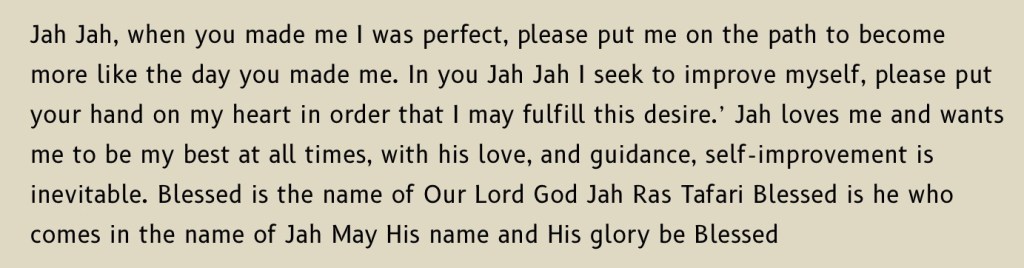
And lastly, a prayer that echoes the ideas in psalm 24…
 Lockdown Letters